
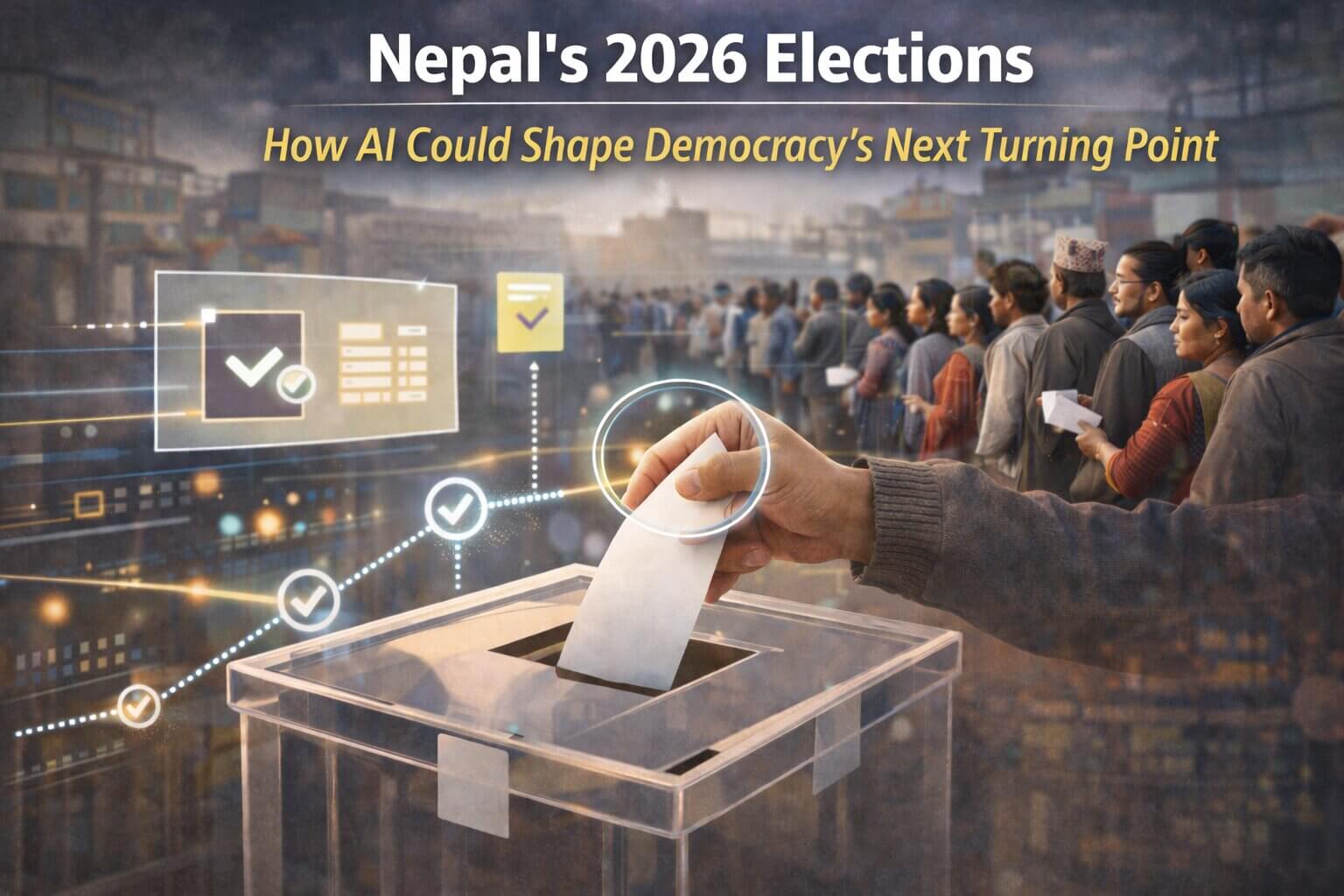
The recent political demonstrations in Nepal were more than an expression of frustration; they were a clear call for reform and a sign of the energy of a younger generation demanding change. As Nepal approaches the 2026 general elections, restoring public trust will depend not only on political leadership, but also on how effectively institutions adapt to new modes of communication and participation.
Artificial Intelligence (AI) is increasingly becoming a practical component of modern political and administrative systems. When applied responsibly, it can support multilingual communication, reduce barriers to political engagement, and broaden participation in democratic processes. For countries with linguistic diversity, geographic fragmentation, and limited institutional capacity, these tools are no longer theoretical; they are important parts of how democratic systems function in practice.
Global Experience from the 2024 Election Cycle
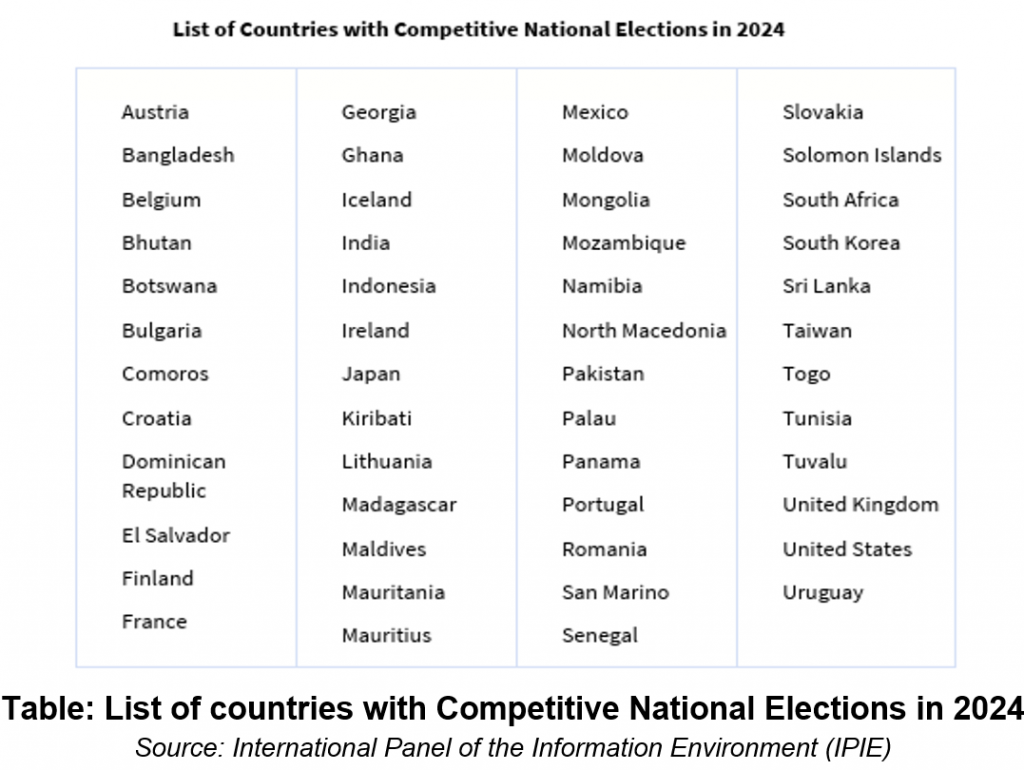
The global election cycle of 2024 showed that AI is already embedded in electoral systems across a wide range of political contexts. In many cases, its use expanded voter outreach, improved administrative efficiency, and helped governments handle public input at a scale that would otherwise be difficult to manage. These experiences also made one point clear: the impact of AI in elections depends less on the technology itself than on governance, transparency, and institutional readiness.
Essential Cyber Hygiene Practices
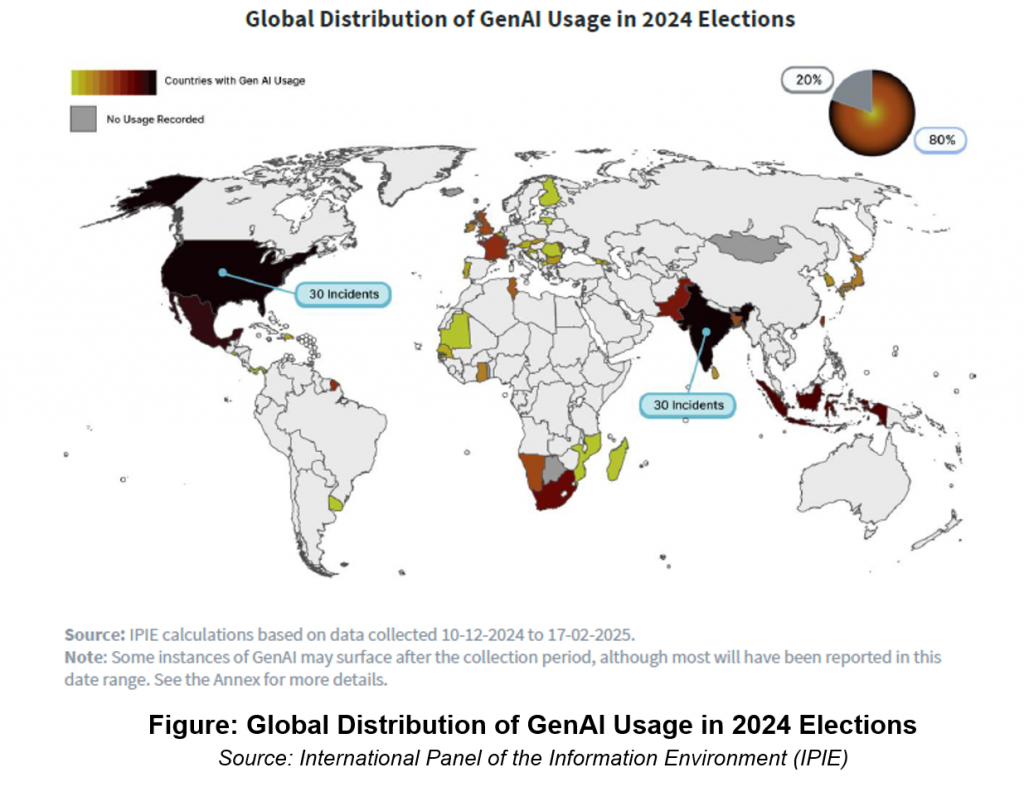
The 2024 “super election year” provided concrete examples of how this played out in practice. While public debate often focuses on risks, global data shows that AI has also been used in constructive and institutionally supportive ways to improve voter engagement and transparency.
In India, the world’s largest democracy, Prime Minister Narendra Modi’s use of the AI translation tool Bhashini during public addresses demonstrated technology as a bridge, not a filter. By translating speeches into multiple regional languages in real-time, AI expanded political access for millions without altering the substance of the message. Similarly, in Taiwan, civic platforms have employed AI to summarize vast amounts of citizen input, allowing the government to “listen at scale” while ensuring the deliberation remains human-led.
Even behind the scenes, AI is strengthening the procedural fairness of elections. In Brazil, electoral authorities have utilized AI to monitor campaign finance and process complaints quietly and transparently, improving administrative efficiency. In Africa, countries like Madagascar and South Africa have utilized AI for voter authentication and registration management, propping up election security and ensuring the integrity of the ballot box.
Lowering Barriers to Political Participation
One of the most significant structural effects of AI in elections is its impact on cost and access. Traditional campaigning methods—large rallies, mass media advertising, and extensive ground operations—have historically favored established parties with financial and organizational advantages.
AI-driven tools have begun to alter this balance. During India’s 2024 elections, campaign practitioners observed that AI-assisted outreach reduced communication costs substantially. Automated voice messaging, targeted text outreach, and multilingual content generation enabled candidates to engage voters directly at a fraction of the cost of conventional methods.
For Nepal, this has implications for younger candidates, smaller parties, and community-based movements. AI-enabled tools can facilitate communication in local languages, support issue-specific engagement, and allow candidates to respond more systematically to local concerns. Used appropriately, these tools can reduce dependence on traditional political intermediaries without replacing direct human engagement.
Risks, Misuse, and Institutional Vulnerabilities
While we embrace the positive potential of AI, a realistic perspective requires us to acknowledge that the possibility for misuse remains. Electoral systems rely on trust, and poorly governed technology can undermine that trust quickly.
Over the past few years, AI has already been used around the world to gain unjustified political advantage, often at moments of heightened tension. During India’s 2023–2024 election cycles, AI-generated videos and audio clips circulated online depicting politicians saying or doing things that never happened, spreading rapidly through social platforms and private messaging networks before verification was possible. Even in the United States, in early 2024, AI-generated robocalls impersonating President Joe Biden urged voters not to participate in a primary election. Across very different political systems, the pattern was the same: AI was not used to persuade everyone, but to confuse enough people at critical moments to undermine confidence and tilt outcomes.
Furthermore, AI can worsen existing structural vulnerabilities, such as the spread of misinformation in regions with uneven internet connectivity. In Nepal, the “absent voter” dynamic—where labor migrants influence family decisions at home through fragmented communication channels—creates a fertile ground for AI-accelerated rumors. These risks highlight why proper knowledge and awareness are essential; the solution is not to fear the technology, but to master its ethical application.
Implications for Nepal’s 2026 Elections
For Nepal, the 2026 elections are an opportunity to use AI as a support tool that clarifies rather than steers. By aligning AI with Nepal’s oral traditions and community networks, the technology can support democracy without displacing human judgment. AI can be a force for good in Nepal by:
- Strengthening Communication: Using AI translation to ensure consistent messaging across linguistic and geographic divides.
- Promoting Inclusion: Providing low-cost tools for youth-led movements to organize and participate in the political process.
- Enhancing Civic Education: Creating accessible, high-quality educational materials that match how citizens actually consume information on platforms like TikTok and WhatsApp.
- Ensuring Administrative Fairness: Deploying AI behind the scenes to process complaints and strengthen electoral administration quietly and transparently.
With the right frameworks in place, we can mitigate risks while maximizing benefits. Strengthening fact-checking networks and implementing mandatory disclosures for AI-generated content are practical steps toward building a resilient information environment.
AI does not determine the quality of a democracy. It reflects the strength or weakness of the institutions that deploy it. For Nepal, the real challenge before the 2026 elections is not the technology itself, but how responsibly institutions handle it. Used with transparency, restraint and clear oversight, it can help citizens access information more easily, participate more effectively, and engage with institutions that operate at the scale and complexity of modern society.